
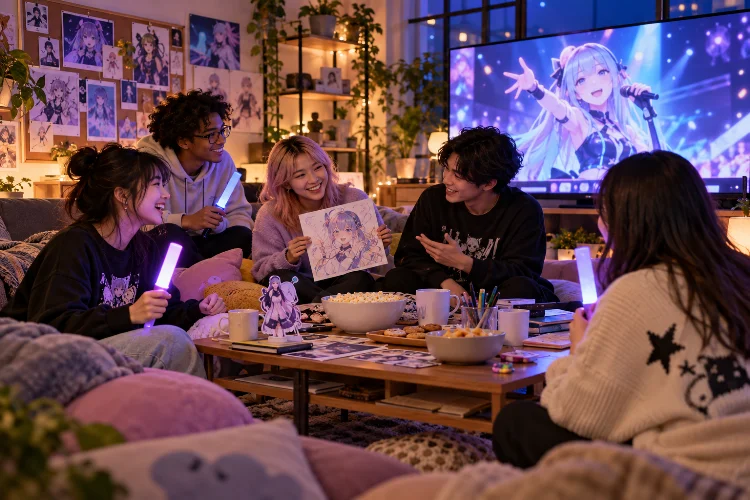
Imagine joining a virtual idol livestream for the first time. You’re enjoying the music, laughing at the character’s jokes, and watching thousands of viewers share reactions in real time.
A few days later, you discover fan art, discussion groups, community events, and people who genuinely enjoy spending time together.
Before you know it, you’re not just following a virtual performer. You’ve become part of something bigger.
That’s how powerful digital fandoms can be.
Understanding how virtual idol fandoms build sustainable digital communities reveals an interesting truth about modern entertainment: long-term success isn’t simply about attracting viewers or collecting social media followers.
It’s about creating meaningful connections between people who share common interests.
From VTuber livestream communities to virtual K-pop fandoms and AI-powered entertainment projects, these digital spaces thrive when fans feel welcomed, respected, and involved.
However, keeping communities healthy requires thoughtful planning, transparent leadership, creative participation, and realistic expectations.
Let’s explore the strategies that help virtual idol fandoms grow beyond temporary online trends and become engaging communities that people genuinely want to support.
1. Creating a Shared Identity That Brings Virtual Idol Fans Together
Every successful fandom begins with something people can connect around.
For virtual idols, that connection often starts with a distinctive character, memorable performances, or an entertaining personality.
However, a strong community develops when viewers begin connecting with one another, not just the performer.
Turning Individual Viewers Into a Collective Community
Imagine a fictional virtual singer called Nova Echo, whose character revolves around discovering forgotten music across imaginary galaxies.
At first, audiences might watch Nova because they enjoy her songs or futuristic design.
Over time, dedicated followers begin sharing theories about her fictional universe, discussing favorite performances, and creating artwork inspired by her adventures.
These interactions gradually transform an audience into a recognizable fandom.
Members might establish their own community nickname, recurring jokes, visual symbols, and traditions.
Such shared elements create a sense of belongng that extends beyond individual livestreams.
Fans begin recognizing each other and forming friendships through their common interests.
Why Community Identification Matters
Research published in the Journal of Broadcasting & Electronic Media in September 2026 offers useful insight into this process.
Jiang, Yang, and Luo surveyed 316 VTuber viewers in mainland China to examine parasocial relationships, social presence, community identification, and financial support.
Their findings showed that perceived authenticity and interactivity were positively associated with relationships involving both virtual performers and fellow fans.
Interestingly, identification with the fan community directly predicted monetary support in their statistical model, while parasocial relationships alone did not.
This doesn’t mean every fandom behaves identically, but it highlights an important distinction.
Successful communities give people reasons to value the relationships they’ve developed with other members, rather than relying exclusively on their attachment to a fictional celebrity.
For creators, encouraging friendships and shared experiences can be more meaningful than constantly chasing individual attention.
2. Encouraging Fan Creativity and Participatory Culture
One of the most interesting aspects of virtual idol fandoms is how audiences contribute to the entertainment experience.
Fans aren’t always passive consumers.
They often become artists, translators, video editors, discussion organizers, and creative collaborators.
Making Fan-Generated Content Part of Community Culture
Fan art is one of the easiest ways to encourage creative participation.
A virtual idol’s appearance, personality, and fictional background provide endless opportunities for visual interpretations.
For Nova Echo, followers might create illustrations showing her exploring fictional planets, performing concerts, or interacting with other digital characters.
Other fans could produce song covers, animated clips, humorous edits, or interpretations of her character lore.
These contributions help keep conversations active between official releases.
Media scholar Henry Jenkins describes fandom as a form of participatory culture, where audiences actively create, reinterpret, and share media-related experiences.
This perspective helps explain why active fan communities can develop identities that are larger than the entertainment properties that originally brought them together.
Recognizing Contributions Without Creating Pressure
Creators can support participation by organizing fan art showcases, community playlists, or collaborative creative challenges.
For example, Nova’s team might invite fans to design imaginary destinations for an upcoming music video.
Selected artwork could appear in an official community gallery, with proper permission and creator attribution.
However, participation should remain optional.
Not everyone has the time, equipment, or confidence to produce original content.
Some followers prefer discussing music, reacting to livestreams, or quietly enjoying community activities.
A healthy fandom recognizes that these forms of engagement are equally valid.
Clear fan-content guidelines are also important, especially when artwork, remixes, or animations might be used commercially.
Respecting creators’ ownership and giving proper credit helps establish long-term trust.
3. Designing Welcoming Digital Spaces for Long-Term Engagement
An active fandom needs places where conversations can continue after performances end.
Platforms such as Discord, YouTube, Reddit, and community forums provide different opportunities for interaction.
However, simply opening a server doesn’t automatically create a welcoming environment.
Make Joining the Community Easy
New members can feel overwhelmed when they encounter dozens of unfamiliar channels, complicated rules, and inside jokes they don’t understand.
A well-designed onboarding experience solves much of this confusion.
Discord’s official Community Onboarding guidance explains how server administrators can help newcomers discover relevant channels and select roles based on their interests.
For a virtual idol community, newcomers might choose whether they’re interested in music discussions, fan art, gaming, or fictional character lore.
This gives people an immediate starting point.
Instead of requiring everyone to participate in the same conversations, the community becomes more accesible to different interests.
A friendly introduction channel, clear community guidelines, and occasional newcomer events can also make a significant difference.
Develop Activities Beyond Official Livestreams
Sustainable online communities need interaction opportunities that don’t depend entirely on the idol’s availability.
Fans might organize listening parties, casual game nights, creative workshops, or discussions about upcoming releases.
For example, Nova’s community could host a monthly event where members share music inspired by fictional space exploration.
These activities encourage relationships between participants.
They also help maintain engagement during breaks between official performances.
Importantly, not every event needs to be large or complicated.
Small gatherings that encourage meaningful conversation can be more valuable than elaborate campaigns attracting attention for only a few hours.
The objective is to make participation enjoyable, not exhausting.
4. Building Trust Through Community Moderation and Healthy Boundaries
Online fandoms can be exciting spaces, but they also face challenges involving harassment, misinformation, privacy, and interpersonal disagreements.
Without appropriate moderation, these problems can gradually damage community trust.
Strong leadership helps create an environment where members feel comfortable participating.
Establish Clear and Fair Community Guidelines
Discord’s official Community Server Guidelines emphasize clearly posted rules, trustworthy moderation teams, and positive environments.
These principles are particularly important in entertainment fandoms where emotional discussions can become intense.
Community rules should explain acceptable behavior, respectful disagreement, privacy expectations, and how members can report problems.
They should also prohibit doxxing, harassment, targeted attacks, and attempts to expose private information about performers or fans.
A moderation team must apply those rules fairly.
When disciplinary decisions appear inconsistent, members may lose confidence in the community’s leadership.
Providing private reporting channels and a reasonable review process can improve transparency.
Respect the Boundaries Between Performers and Fans
Virtual idol entertainment creates interesting relationships between fictional identities, real performers, and audiences.
A 2026 study by Park, Chung, and Seo examined the fandom of South Korean virtual idol group PLAVE through ethnographic research.
The researchers described how fans navigate the distinction between virtual characters and the performers behind them.
Their findings highlight the complicated relationships that can emerge when fictional presentation and real entertainment identities overlap.
For community managers, respecting personal boundaries is essential.
Fans should not be encouraged to investigate private performer identities, demand constant personal attention, or treat fictional interactions as promises of private relationships.
Likewise, creators should avoid manipulating emotional attachment to encourage excessive spending or obsessive engagement.
A sustainable fandom allows people to enjoy a meaningful connection with entertainment while maintaining healthy offline lives.
5. Preventing Fan Burnout and Supporting Volunteer Leadership
Enthusiastic fans often contribute enormous amounts of time to their favorite communities.
They manage social accounts, organize events, translate announcements, maintain discussion spaces, and coordinate creative projects.
These contributions can be valuable, but they also create challenges.
Recognize the Hidden Work Behind Successful Fandoms
Research by Raihani and Kurnia on an Indonesian ENHYPEN WhatsApp fan community explored how administrators sustain organized fan activities.
The study examined community interactions and interviews with members, finding that administrators played important roles in coordinating projects, managing information, and connecting fans.
However, this voluntary work also involved emotional demands and time commitments.
Although the research focused on a K-pop fandom rather than virtual idols specifically, the challenges are relevant to similar digital communities.
A moderator who spends several hours managing disputes after every livestream may eventually become exhausted.
Likewise, fans responsible for coordinating constant promotional campaigns might begin experiencing their hobby as an obligation.
Create Sustainable Community Responsibilities
Rather than relying on a few highly active volunteers, community leaders can distribute responsibilities across several trusted members.
Moderators might rotate responsibilities, while event organizers can share planning tasks with smaller teams.
Clear expectations prevent volunteers from feeling obligated to remain constantly available.
Communities should also make it easy for contributors to take breaks without guilt.
For example, Nova’s fandom could maintain a simple calendar identifying which volunteers are responsible for upcoming events.
If someone becomes unavailable, another team member can temporarily cover essential tasks.
The goal is maintaining a consistant level of community support without demanding unrealistic commitments.
Recognition matters too.
Acknowledging contributions, celebrating completed projects, and offering genuine appreciation can help volunteers feel valued.
For larger commercial projects, creators should also consider whether ongoing, business-critical tasks deserve paid roles rather than depending indefinitely on unpaid labor.
6. Developing Sustainable Revenue Without Exploiting Fan Loyalty
Financial support can help virtual idol projects maintain production quality and continue creating entertainment.
Music releases, character animation, livestream infrastructure, and community management all require resources.
However, healthy monetization should support the entertainment experience rather than dominate it.
Offer Meaningful Ways to Support the Project
Virtual idol creators may generate revenue through merchandise, digital albums, channel memberships, livestream donations, and special events.
Each option should provide clear value and respect different financial circumstances.
For example, Nova might offer optional merchandise featuring character artwork, alongside free community listening events.
Dedicated supporters could purchase a digital concert ticket while casual followers continue enjoying publicly available content.
This approach allows people to participate regardless of spending ability.
Financial contributions shouldn’t determine whether someone receives basic respect or feels welcome.
Avoid Creating Unhealthy Spending Competition
Some fan communities develop informal hierarchies based on donation totals, merchandise collections, or participation in expensive events.
Although enthusiastic spending isn’t automatically problematic, making financial contributions a measure of loyalty can create social pressure.
Creators should avoid implying that fans must purchase products to prove affection or belonging.
Donation leaderboards, exclusive emotional attention, and repeated urgency-based campaigns also deserve careful consideration.
The 2026 VTuber study by Jiang and colleagues suggests that community identification is associated with monetary support.
However, the research doesn’t establish that increasing social pressure will produce sustainable revenue.
A better interpretation is that people may be more willing to support entertainment communities they genuinely value.
Transparent pricing, realistic merchandise schedules, and clear explanations of optional purchases can encourage trust.
Long-term financial stability should come from delivering worthwhile experiences rather than exploiting emotional attachment.
7. Measuring Community Health and Planning for Long-Term Growth
A community with thousands of followers isn’t necessarily healthier than one with a few hundred active members.
Follower counts provide a useful overview, but they don’t reveal whether people feel included, enjoy participating, or want to return.
Sustainable growth requires more meaningful evaluation.
Focus on Engagement Quality Instead of Popularity Alone
Community managers can examine returning participants, event attendance, discussion quality, volunteer retention, and newcomer engagement.
For example, a Discord server might attract 500 new members after a successful concert.
However, if almost everyone leaves within a week, the community may need better onboarding or more engaging activities.
Compare that situation with a smaller group where people regularly attend listening parties and welcome new members.
The second community might have stronger long-term foundations despite lower membership numbers.
Qualitative feedback matters just as much as numerical metrics.
Occasional anonymous surveys can reveal whether members feel safe, respected, and satisfied with available activities.
Moderators can also review whether conflicts are resolved fairly and whether volunteers are becoming overwhelmed.
Adapt to Changing Platforms and Fan Interests
Digital entertainment communities operate in constantly changing online environments.
Platforms introduce new features, audience interests evolve, and content distribution systems change.
A sustainable fandom needs enough flexibility to adapt.
Creators can maintain communication across several platforms while keeping one clearly identified home for official announcements.
Community guides, important creative resources, and event information should remain easy to find.
For example, Nova’s production team might use YouTube for performances, Discord for conversations, and an official website for announcements and archived content.
If one platform experiences disruptions or policy changes, the community can still access essential information elsewhere.
Maintaining opt-in communication channels can also reduce dependence on a single social network.
Plan for Natural Changes in Activity
No entertainment community remains equally active every day.
Interest might increase during music releases, collaborations, or important storyline developments, then decline during quieter periods.
These fluctuations are normal.
Instead of producing endless events to maintain constant activity, creators should develop realistic schedules that balance excitement with rest.
Seasonal campaigns, predictable community gatherings, and occasional collaborative projects can provide structure without overwhelming participants.
A welcoming culture also helps older and newer members connect as the fandom evolves.
Ultimately, long-term community growth depends on meaningful relationships, responsible leadership, and shared enjoyment.
When members feel respected and appreciated, the digital space becomes more than a promotional channel for a virtual idol.
It becomes a community worth returning to.
Understanding how virtual idol fandoms build sustainable digital communities reveals that lasting success depends on more than impressive performances, viral moments, or massive follower counts.
Healthy fandoms grow through shared identity, creative participation, welcoming environments, effective moderation, and meaningful relationships between members.
They also require responsible monetization, respect for personal boundaries, and realistic expectations for volunteers and creators.
Most importantly, sustainable communities give audiences opportunities to contribute without making participation feel like an obligation.
Whether you’re developing an independent VTuber or managing an established virtual entertainment brand, building trust should remain a central priority.
Ready to strengthen your virtual idol community? Start by improving your onboarding experience, encouraging creative collabaration, and creating spaces where fans can connect naturally.
The strongest fandoms aren’t simply audiences that keep watching. They’re communities that genuinely enjoy growing together.
