
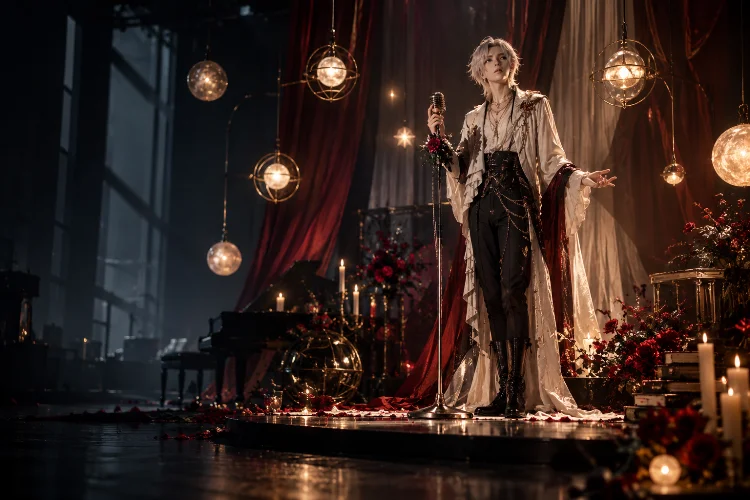
Imagine discovering a virtual idol with stunning character design, incredible music, and flawless animation. Everything looks impressive, but after watching a few performances, something feels missing.
You don’t really know who the character is, what they care about, or why you should follow their journey.
That’s where storytelling changes everything.
Building distinctive virtual idol personas through storytelling isn’t simply about inventing fictional backgrounds or adding dramatic plot twists.
It’s about giving digital performers recognizable identities, believable motivations, and meaningful experiences that audiences genuinely want to follow.
Today’s virtual entertainment landscape includes VTubers, AI-powered performers, animated musicians, and computer-generated influencers. With so many digital personalities competing for attention, attractive visuals alone rarely provide a lasting competitive advantage.
The characters that stand out often have something deeper: a compelling identity that connects their appearance, behavior, music, and interactions.
Whether you’re developing an independent VTuber, launching a virtual music group, or creating a digital entertainment brand, thoughtful narrative design can transform an appealing avatar into a personality people remember.
Let’s explore how to make that happen.
1. Why Storytelling Matters in Virtual Idol Character Development
Virtual idols exist in an interesting space between fictional characters and interactive entertainers. They can perform music, communicate with audiences, participate in livestreams, and develop ongoing narratives without being limited to traditional entertainment formats.
However, sophisticated technology doesn’t automatically produce emotional engagement.
Moving Beyond Attractive Character Designs
Visual design creates the first impression, but storytelling gives audiences reasons to stay.
Consider two fictional virtual performers with nearly identical production quality. One simply uploads polished songs, while the other tells the story of a digital musician trying to recover forgotten melodies from a disappearing virtual universe.
Both might attract viewers initially, but the second offers something additional: curiosity about what happens next.
The character’s artistic decisions suddenly carry meaning. Every new song could reveal another piece of their personal journey, making each release part of a larger entertainment experience.
This doesn’t mean every virtual singer needs an elaborate fantasy universe. Even relatively realistic characters benefit from recognizable goals, emotional conflicts, and personal interests.
The Psychology Behind Audience Connections
People naturally respond to personalities that feel familiar, relatable, or emotionally meaningful.
Research published in Computers in Human Behavior examined how emotional narratives and disclosure of virtual influencers’ artificial origins influence parasocial interaction and credibility.
The findings suggest that emotional storytelling can play an important role in how audiences connect with digital personalities.
A parasocial relationship describes a one-sided emotional connection that someone develops with a media figure.
For virtual idol creators, the lesson is practical: meaningful stories can encourage attachment, but the relationship should remain transparent and respectful.
The objective isn’t to convince people that fictional performers are human. It’s to create characters whose experiences are enjoyable and emotionally resonant within their fictional context.
2. Creating a Strong Character Identity Before Developing the Story
One common mistake in virtual character creation is writing complicated lore before defining the actual personality.
A character might have an extensive fictional history involving futuristic civilizations, magical abilities, or secret organizations. Yet none of those details matters much if audiences cannot recognize their everyday behavior.
Start with identity, then build the fictional universe around it.
Define the Character’s Core Personality
Every distinctive digital performer needs an identifiable combination of values, motivations, strengths, and weaknesses.
Instead of relying on generic descriptions such as friendly, energetic, or mysterious, consider how those qualities influence decisions.
Imagine a fictional virtual idol named Luma Vale, a curious musician who collects forgotten songs transmitted by abandoned satellites.
Luma is optimistic, stubborn, and deeply afraid of losing memories. She loves helping strangers preserve meaningful moments but struggles to finish her own compositions.
That contradiction creates opportunities for storytelling.
Her curiosity motivates exploration, her stubbornness causes occasional mistakes, and her fear of forgotten memories explains her emotional connection to music.
Suddenly, her personallity feels more interesting than a simple collection of attractive traits.
Give Your Character a Clear Motivation
Strong characters usually want something specific.
Their motivation might involve becoming a successful performer, reconnecting fragmented digital communities, discovering their origins, or proving that artificial creativity has emotional value.
An effective motivation should connect naturally to the content audiences experience.
For example, Luma’s mission to preserve forgotten songs gives her a believable reason to release music, explore different genres, and collaborate with other fictional performers.
The backstory supports the entertainment instead of competing with it.
Create a Practical Character Bible
A character bible is a working document that establishes the rules of a virtual persona.
It should explain the performer’s motivations, communication style, visual identity, important relationships, emotional boundaries, and fictional world.
For production teams, this document becomes especially valuable when several writers, designers, musicians, or livestream performers contribute to the same project.
The character doesn’t need to behave identically in every situation. However, their reactions should remain understandable within an established identity.
That consistency helps audiences recognize the performer across different content formats.
3. Developing Compelling Backstories and Emotional Character Arcs
A good backstory explains where a character comes from. A great backstory also creates possibilities for what happens next.
That’s an important difference.
When developing virtual idol lore, avoid treating the past as a collection of disconnected facts. Instead, use it to establish motivations, unresolved questions, and future narrative opportunities.
Build Around Emotional Conflicts
Emotional conflict doesn’t necessarily mean tragedy.
A cheerful digital singer might struggle with perfectionism, while a confident virtual celebrity could secretly fear disappointing their audience.
These contradictions make fictional personalities more layered.
For Luma Vale, the central conflict involves preserving other people’s memories while avoiding her own unfinished musical project.
She can encourage others to embrace their creativity, yet she hesitates whenever someone asks about her personal compositions.
This conflict might gradually develop through songs, conversations, animated shorts, and collaborative performances.
Audiences receive meaningful character development without needing to read an enormous fictional encyclopedia.
Use Mystery Without Making Everything Confusing
A little mistery can make virtual idol storytelling more engaging.
Perhaps a recurring symbol appears in several music videos, or a character occasionally mentions a location that hasn’t been introduced.
These details encourage curiosity and discussion.
However, creators should avoid withholding so much information that newcomers feel excluded.
An effective approach is to maintain three layers of narrative information: an immediately understandable identity, optional details for curious fans, and deeper story arcs for dedicated followers.
Someone discovering Luma for the first time should understand that she’s a musician collecting lost melodies.
Longtime followers might recognize that her search connects to an unresolved event from her past.
Both audiences can enjoy the character at different levels.
Allow Characters to Grow Naturally
Fictional personalities become more memorable when experiences influence their future behavior.
A nervous virtual performer might gradually become more confident after successful collaborations. A competitive digital musician could learn to value friendship over recognition.
Growth should feel earned rather than appearing suddenly because the production team wants a different personality.
Small changes can be especially effective, such as a character referencing an earlier mistake or revisiting a melody from their debut.
These narrative callbacks reward audience attention and make the overall journey feel connected.
4. Connecting Visual Design, Music, and Personality With Storytelling
A virtual idol’s identity shouldn’t exist only in written lore.
Character design, animation, music, dialogue, and performance style should reinforce the same narrative direction.
When those elements work together, audiences can recognize a performer’s personality even without reading an official biography.
Use Visual Details as Storytelling Tools
Colors, hairstyles, costumes, accessories, and silhouettes communicate information before a character speaks.
Imagine Luma wearing a jacket decorated with constellation-like patterns and carrying headphones shaped like old communication devices.
Those design choices immediately support her connection to forgotten satellite transmissions.
Her costume might also change throughout the story. An early outfit could feature damaged technological accessories, while later designs gradually introduce repaired or redesigned elements.
These changes can represent character development rather than serving only as promotional updates.
However, visual complexity should never compromise readability.
A recognizable silhouette, carefully selected color palette, and several meaningful accessories are often more effective than dozens of unexplained details.
Let Music Reveal Character Development
Music offers virtual idols a particularly powerful narrative tool.
Lyrics can communicate emotions, while changes in musical style can reflect new experiences, relationships, or personal discoveries.
A character beginning with isolated electronic compositions might gradually incorporate warmer instruments as they develop stronger connections.
That progression gives the music an additional emotional purpose.
A 2025 study in the Journal of Sound and Music in Games examined how sound and music contribute to the authentication of VTuber personas. This highlights the importance of treating performance as part of character identity rather than merely a separate promotional activity.
The strongest approach connects what the audience hears with what the character experiences.
Create a Recognizable Communication Style
A virtual idol’s speaking patterns can become just as recognizable as their appearance.
Some performers communicate through playful sarcasm, while others use poetic descriptions, enthusiastic reactions, or calm encouragement.
For Luma, references to signals, frequencies, and distant stars might naturally appear in everyday conversations.
The important thing is keeping these habits enjoyable rather than repetitive.
A consistant voice makes fictional personalities easier to recognize across livestreams, interviews, and social media posts.
5. Building an Immersive Virtual World Around the Idol
Once a virtual performer has a compelling identity, storytelling can expand beyond individual character development.
Worldbuilding gives the character an environment that feels connected to their experiences.
This doesn’t require creating an entire fictional civilization. A few well-developed locations, relationships, and recurring events can already make the experience richer.
Create Meaningful Fictional Environments
A character’s surroundings should reveal something about their personality.
Luma might broadcast from a floating music archive filled with damaged recordings and holographic instruments.
Different rooms could represent different musical genres, memories, or stages of her journey.
Instead of creating locations purely for aesthetic appeal, assign each environment a narrative purpose.
A recording studio might symbolize creativity, while a mysterious transmission chamber represents unanswered questions.
These locations can appear across performances, promotional illustrations, animated videos, and interactive digital experiences.
Learn From Established Virtual Entertainment
One useful example is Hatsune Miku, developed by Crypton Future Media.
According to Crypton’s official profile, Miku evolved from a singing voice synthesizer into a globally recognized virtual performer supported by a large creative community.
Her flexible character identity has allowed musicians, illustrators, animators, and fans to contribute imaginative interpretations.
This demonstrates that successful virtual entertainment doesn’t always require one rigidly controlled storyline.
Sometimes, leaving room for creativity allows audiences to build additional meaning around a recognizable character.
For independent creators, the takeaway is to establish clear identity foundations while allowing the surrounding world to grow through creative collaboration.
Make Every Platform Contribute Something Different
Transmedia storytelling involves developing a narrative across multiple media, with different formats contributing distinct elements.
Rather than repeating the same information everywhere, creators can use each platform for a particular storytelling purpose.
For example, a music video might introduce Luma’s emotional conflict, while a livestream explores her reaction to the events.
A short social media animation could reveal a minor character, and an interactive website might contain optional background information.
This approach creates a richer enviroment without forcing audiences to follow every single platform.
The key is ensuring that each experience remains enjoyable on its own.
6. Encouraging Fan Participation and Community Storytelling
Virtual idol entertainment becomes especially interesting when audiences can actively participate.
Unlike traditional fictional celebrities, digital performers often communicate with followers in real time through livestream chats, community events, and social media discussions.
These interactions create opportunities to make fans feel involved in a shared creative experience.
Turn Audience Interaction Into Narrative Opportunities
Participation doesn’t need to involve complicated technology.
A virtual performer might invite audiences to suggest song themes, design concert accessories, or choose which fictional location to explore next.
For Luma, viewers could vote on which mysterious transmission she investigates during an upcoming stream.
The production team would still control the main story, but audiences would influence how certain events unfold.
This creates a balance between creative direction and community involvement.
It also generates anticipation because participants can look forward to seeing the results of their contributions.
Support Fan Art and Creative Contributions
Fan art, musical remixes, fictional interpretations, and community discussions can extend a digital character’s cultural presence.
Creators can encourage participation through clear guidelines, official challenges, and appropriate recognition of contributors.
However, community creativity should not automatically become official canon.
A clear distinction between authorized storylines and fan interpretations helps avoid confusion and protects creative ownership.
Teams should also establish policies for commercial usage, credit, remix permissions, and potentially sensitive content.
Build Emotional Connections Responsibly
Audience attachment can be valuable, but it requires thoughtful boundaries.
A four-week experience-sampling study published in 2025 followed 185 young adults and found that parasocial relationship intensity increased over time for both human and virtual influencers.
This suggests that digital personalities can support developing audience connections, even without being human performers.
Creators should avoid exploiting those relationships through manipulative emotional pressure or misleading claims about artificial characters.
Be transparent about the nature of the persona and the technology behind it, especially when AI-generated interactions are involved.
Healthy communities are built around shared enjoyment, not manufactured emotional dependence.
7. Planning Long-Term Storytelling and Measuring Character Success
Building an engaging virtual personality is an ongoing creative process.
Characters need room to evolve, but they also need enough consistency to remain recognizable.
A thoughtful storytelling roadmap helps creators maintain that balance while producing content regularly.
Develop Flexible Narrative Seasons
Instead of planning an endless storyline, divide character development into manageable narrative arcs.
An introductory season might establish the performer’s identity, daily environment, and central ambition.
A second season could introduce a meaningful challenge, while a later chapter explores its consequences and resolution.
For Luma, the first arc might involve discovering mysterious recordings. The second could reveal connections between those recordings and her unfinished song.
A later arc might finally show her performing the complete composition.
Each chapter creates opportunities for music releases, visual updates, collaborations, and community events.
Importantly, the schedule should remain flexible enough to accommodate audience reactions and realistic production limitations.
Measure Engagement Beyond Follower Counts
Large audience numbers can look impressive, but they don’t always reveal whether storytelling is working.
Creators should also examine audience retention, repeat participation, meaningful comments, and engagement with character-specific content.
For example, compare a standard performance video with one featuring a major narrative development.
Do viewers spend longer watching the story-driven release? Are they discussing character motivations or referencing earlier events?
These responses may indicate whether the narrative is creating deeper interest.
You can also monitor how many followers participate in creative challenges, revisit previous episodes, or engage with recurring fictional themes.
Those signals are often more informative than isolated viral moments.
Keep Improving Without Losing the Character
Audience feedback provides valuable creative direction, but changing a personality every time someone suggests something new can weaken its identity.
A character who suddenly abandons established motivations may confuse dedicated followers.
Instead, use feedback to improve storytelling clarity, pacing, accessibility, and emotional relevance.
Research on virtual influencer marketing also suggests that credibility, perceived authenticity, and appropriate character design influence audience responses.
Creators should therefore focus on developing believable behavior within the fictional identity rather than constantly chasing novelty.
Long-term success often comes from combining recognizable traits with gradual, meaningful evolution.
The technology supporting virtual performances will continue to change, but the foundations of engaging storytelling remain surprisingly familiar: understandable motivations, emotional stakes, consistent characterization, and satisfying development.
Building distinctive virtual idol personas through storytelling is about creating digital characters with more than attractive appearances and impressive technical capabilities.
Memorable virtual performers have recognizable personalities, meaningful motivations, engaging backgrounds, and fictional worlds that support their creative identities.
By connecting narrative development with character design, music, audience interaction, and long-term content planning, creators can build more immersive digital entertainment experiences.
The strongest storytelling strategies also leave room for audience creativity while maintaining clear boundaries and narrative consistency.
You don’t need a massive production budget or an incredibly complicated fictional universe to get started. A believable character with a compelling goal can become the foundation of something much bigger.
Ready to create your own virtual idol? Start by defining one unique personality, one meaningful motivation, and one story worth following. Then let every performance bring that character a little closer to life.
